
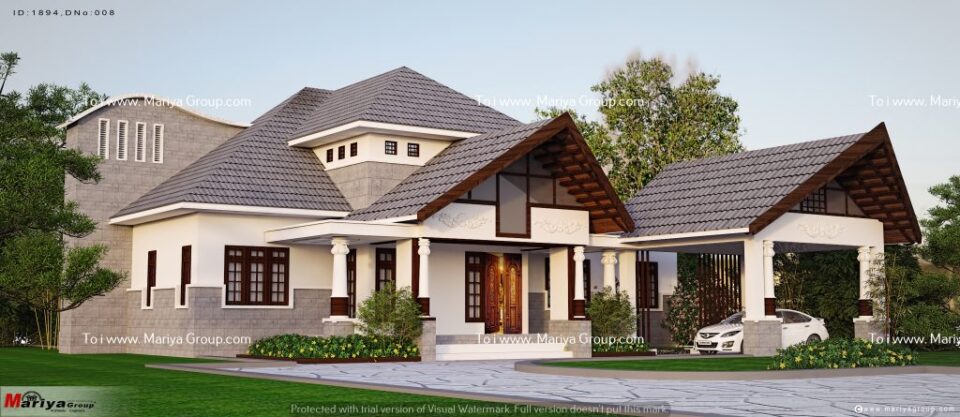
People spend months agonizing over floor plans and locations, yet they often spend far less time properly vetting the best home builders who will actually construct the home. That is backwards. The builder is the single most consequential decision in the entire process; a great plan built badly is a problem that lives with you for decades.
The best home builders share several non-negotiable qualities: a verifiable track record in your area, transparent communication, a structured warranty program, and the financial stability to complete your project. They are not necessarily the cheapest or the most nationally recognised – they are the most accountable.
National vs. Regional vs. Custom Builders
| Builder Type | Who They Are | Typical Cost | Strengths | Limitations |
|---|---|---|---|---|
| National production builder | Large companies (D.R. Horton, Lennar, Pulte) | Entry to mid-range | Consistent process, well-financed, fast build | Limited customisation, volume-first mindset |
| Regional builder | Operates in specific metro or state area | Mid to upper-mid range | Local knowledge, more flexibility, community presence | Varies widely in quality – research critical |
| Semi-custom builder | Offers set plans with personalisation options | Mid to premium range | Balance of customisation and efficiency | Selections can get expensive fast |
| Full custom builder | Builds to your design from scratch | Premium to luxury | Complete control, unique result | Longest timeline, highest cost, most complexity |
What Defines the Best Home Builders
Setting aside brand name and marketing, the best builders are defined by outcomes. Ask yourself: do their past clients live in homes they are genuinely happy with? Do problems get resolved promptly? Was the build on budget and timeline? These questions matter more than a glossy showroom.
- Track record of completed projects: how many homes have they built in your area, at your price point, and in what timeframe?
- Subcontractor relationships: the best builders have long-term relationships with the same electricians, plumbers, and framers. High subcontractor turnover is a warning sign.
- Communication structure: is there a dedicated project manager? How often do you get updates? What is the escalation process when something goes wrong?
- Financial stability: a builder who goes under mid-project is every buyer’s nightmare. Check that they are properly bonded and have a track record of completing projects.
- Warranty terms: minimum standard is a 1-year workmanship warranty, 2-year mechanical systems (plumbing/electrical), and a 10-year structural warranty. Many quality builders exceed these.
Questions to Ask Before You Sign
- How many homes are you currently building, and how does that affect my timeline?
- Who is my dedicated project manager and how often will I receive updates?
- Can I visit a home you built in the last 12 months and speak with that owner?
- What does your warranty cover, and who handles claims – you or a third party?
- What is included in the base price, and what are the most common upgrade costs?
- How do you handle construction errors when they are discovered after move-in?
- Are your subcontractors employees or independent contractors? Are they licensed?
- What happens to my deposit if construction is delayed or you face financial difficulty?
New Build vs. Custom Home: Cost and Process
| Factor | Production / New Build | Custom Home Build |
|---|---|---|
| Design control | Select from pre-set plans and finishes | Full design input from ground up |
| Timeline | 6 – 12 months typical | 12 – 24 months typical |
| Cost predictability | More predictable – set pricing on upgrades | Variable – changes during build add cost |
| Starting price | $250,000 – $600,000 (varies by market) | $400,000 – $1M+ (varies significantly) |
| Land | Usually included in the package | You source your own lot |
| Customisation | Limited to builder’s options package | Essentially unlimited |
| Financing | Builder may offer preferred lender incentives | Construction loan required – more complex |
Red Flags During the Selection Process
- Reluctance to provide references: a good builder is proud of their work and happy to connect you with past clients.
- Vague contract language: terms like ‘similar materials’ or ‘at builder’s discretion’ give them room to substitute lower-quality items.
- No physical office or show home: an established builder has a presence. If everything is done via cell phone and PDFs, ask why.
- Pressure to decide quickly: artificial urgency is a sales tactic. A reputable builder will give you time to make an informed decision.
- Unusually low quote: building a quality home has real costs. A significantly below-market quote means something is being left out – find out what.
How to Research a Builder’s Reputation
- State contractor licence board: verify their licence is active and has no complaints or sanctions
- Better Business Bureau: look at the complaint history and resolution rate, not just the rating
- Google and Houzz reviews: read the negative reviews carefully – how the builder responded matters as much as what was said
- Local Facebook groups and neighbourhood association pages: unfiltered word-of-mouth from real residents of their developments
- Visit their completed developments in person: knock on a door. People who live in homes built by your prospective builder are your most valuable research source.
Understanding Builder Contracts: Key Clauses to Watch
- Change order clause: what is the process and cost for any change after signing? Some builders charge substantial fees for even minor changes.
- Completion date and penalties: is there a guaranteed completion date? What happens if they miss it – is there any remedy for you?
- Arbitration clause: many builder contracts require disputes to go to arbitration rather than court. Understand what rights you are waiving.
- Substitution clause: specify materials, brands, and model numbers wherever possible. ‘Equivalent product’ clauses allow substitutions you may not agree with.
Final Checklist Before You Commit
- Visited at least two of their completed homes and spoken with the owners
- Verified their contractor licence independently
- Received a fully itemised quote – not just a base price
- Had a lawyer review the contract before signing
- Confirmed the warranty terms in writing
- Checked their financial standing – are they properly bonded?
- Met the actual project manager who will run your build, not just the salesperson
The best home builder for you is not a brand – it is a specific company with specific people who have a verifiable history of building homes like yours, on time, to the standard they promised. That research takes time. It is worth every hour.
