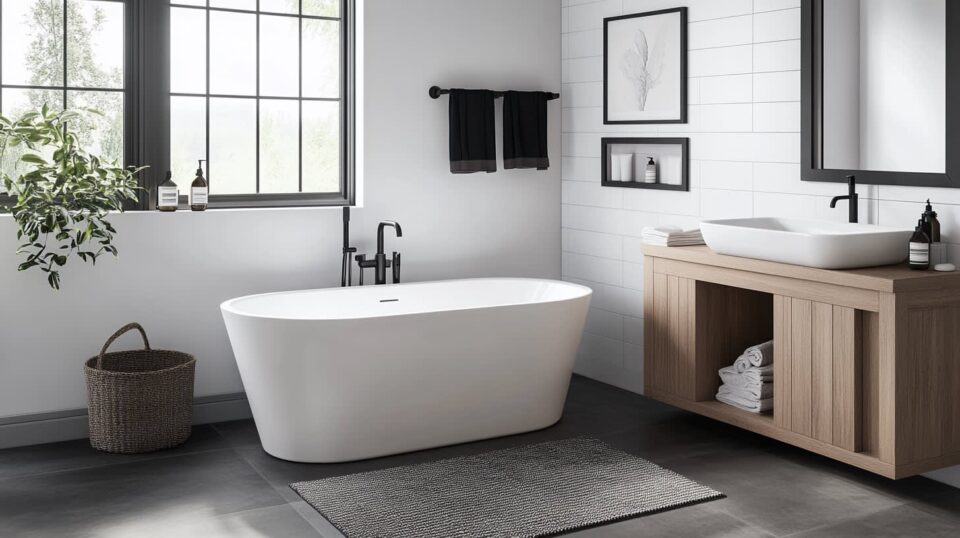
Ideas about bathroom design have evolved, but old misconceptions still linger in the minds of homeowners and renovators. Freestanding bathtubs and vanities often get unfairly judged by outdated beliefs, leading many to shy away from their benefits. It’s time to clear the air and set the record straight.
Common Misconceptions About Freestanding Bathtubs and Vanities
Myth 1: Freestanding Bathtubs Are Difficult to Install
Many believe that a freestanding bathtub requires complex plumbing or specialized floor reinforcement. This notion comes from older installation methods, where rerouting pipes or adding supports could be a hassle. However, innovations in modern plumbing have simplified the process. Today, most freestanding tubs are designed for straightforward installation, often requiring no more effort than a standard built-in tub. Flexible connectors, lightweight materials, and modular designs make it possible to get that spa-like centerpiece without tearing up your entire bathroom.
Myth 2: Bathroom Vanities Must Be Uniform and Traditional
There’s a persistent idea that vanities should match the old-school, boxy look found in decades past. The truth is, contemporary vanities come in a staggering variety of shapes, finishes, and configurations. Options range from minimalist floating units to bold statement pieces with integrated lighting and unique materials. The idea that style and function are limited by tradition just doesn’t hold water anymore.
Myth 3: Freestanding Bathtubs Consume Too Much Space
The grand appearance of a freestanding tub can make it seem like a space hog. While it’s true that a center-of-the-room tub may not fit a tiny powder room, freestanding tubs now come in compact sizes and sleek profiles. Careful placement and planning mean you don’t need a palatial bathroom to enjoy one. In fact, some designs can make a smaller space feel more open and luxurious by eliminating the visual bulk of a built-in surround.
Myth 4: Maintenance and Cleaning Are Complicated
The image of dust bunnies lurking behind a freestanding tub is enough to put some people off. Yet, with the right choice of product and finish, maintenance can be just as simple as with any other fixture. For vanities, concerns often revolve around water damage or hard-to-clean surfaces, but modern materials are engineered for durability and ease of use, making upkeep a breeze.
Why These Myths Persist: The Root of Bathroom Design Confusion
The persistence of these myths isn’t accidental. Several factors combine to keep them alive and kicking.
Influence of Traditional Bathroom Layouts
For generations, bathrooms followed a rigid formula: built-in tubs, vanity cabinets set against the wall, and an overall utilitarian feel. Many homeowners still visualize this template when planning a renovation. The leap to freestanding fixtures can feel intimidating without clear examples of success.
Impact of Online Misinformation and Marketing
The internet is a double-edged sword. While there’s plenty of inspiration, misinformation circulates just as quickly. Stock photos, staged showrooms, and sometimes poorly researched blog posts can reinforce the idea that stylish upgrades require an impractical investment of money or space.
Misunderstandings About Materials and Technology
Misconceptions about what products are made of, and how they perform, build unnecessary anxiety. Older tubs were heavy and fragile, while early vanities often struggled with water resistance. Modern options, however, use advanced composites, solid surfaces, and moisture-resistant finishes that defy those old limitations.
Real Solutions: The Truth Behind Freestanding Bathtubs
Installation Made Simple: Modern Plumbing and Design Innovations
Freestanding tubs have come a long way. Pre-leveled bases, easy-access drain kits, and lightweight construction mean that installation is now within reach for most qualified professionals. Plus, manufacturers often provide clear instructions and support, slashing the guesswork and labor costs.
Space Efficiency: Choosing the Right Size and Placement
Not every bathroom can accommodate a massive soaking tub, but not every freestanding model demands that much real estate. Options include deep-soak tubs with a small footprint, corner designs, and asymmetric shapes to maximize usable space. By thinking creatively about placement, such as along a window or in a niche, even smaller bathrooms can enjoy the freestanding experience.
Material Advances for Durability and Easy Maintenance
Modern bathtubs utilize advanced acrylics, solid surfaces, and engineered stone. These materials are resistant to stains, scratches, and mildew, making them simple to clean. Many vanities now feature water-repellent finishes and integrated sinks that reduce tricky edges and seams where grime can collect.
Reimagining Bathroom Vanities: Flexibility and Functionality
Diverse Styles Beyond the Traditional Norm
Forget the cookie-cutter approach. Vanities now cater to every taste, from rustic wood with artisanal hardware to glossy, minimalist units. Floating vanities can boost the sense of space and allow for under-cabinet lighting, while furniture-style vanities add warmth and personality.
Customization Options to Fit Every Bathroom Size and Style
Thanks to modular manufacturing and a focus on customization, it’s possible to select the width, depth, color, and countertop material that perfectly fits your needs. Whether you’re working with a narrow ensuite or a luxury master bath, there’s a tailored solution available.
Innovative Storage Solutions to Maximize Space
Drawers with built-in organizers, pull-out trays, and integrated shelves make it simple to keep toiletries and cleaning products tidy. Creative storage, such as toe-kick drawers or mirrored cabinets, means that even the most compact vanity can punch above its weight in functionality.
How to Choose the Right Freestanding Tub and Vanity for Your Bathroom
Assessing Your Space and Layout Requirements
Start by measuring your space and mapping out plumbing locations. Consider door swings, walking paths, and access to storage. Don’t just think about the footprint, visual openness matters too.
Matching Style with Functionality
Think about how you use your bathroom every day. Love long soaks? Prioritize ergonomic tubs. Share a bathroom with others? Double sinks can be a lifesaver. The right fixtures should make your routine smoother without sacrificing style.
Budgeting Without Compromising Quality
Setting a realistic budget helps narrow your options, but quality doesn’t have to break the bank. Explore brands that blend value and durability, and check for package deals or seasonal promotions. For example, browsing curated selections at Vasca Design can help you compare quality options across a range of prices, streamlining the decision process.
Taking Action: Steps to Debunk Myths and Upgrade Your Bathroom
Researching Reliable Product Sources and Reviews
Look beyond the marketing gloss. Read customer reviews, browse design forums, and ask for recommendations from people who’ve completed their own renovations. Reliable retailers often provide comprehensive product information and customer testimonials, which can reveal how a product performs in real-life conditions.
Consulting with Bathroom Design Experts
A professional designer or experienced contractor can offer advice tailored to your space and style. They’re skilled at spotting potential issues before they become costly problems and can recommend specific products that have stood the test of time.
Planning and Executing Your Bathroom Renovation with Confidence
Break your project into clear phases: research, budgeting, product selection, and scheduling. Don’t rush, good planning translates to fewer surprises and a smoother result.
Conclusion: Embracing Modern Bathroom Design Without Fear
Stepping past outdated myths opens the door to a more functional, beautiful bathroom. Freestanding bathtubs and modern vanities represent not just a style choice, but an opportunity to create a space that truly fits your life. When you rely on current information, trusted sources, and a willingness to challenge old assumptions, your bathroom renovation can be both practical and inspiring. Shed the fear, embrace innovation, and transform your space into something remarkable.
