
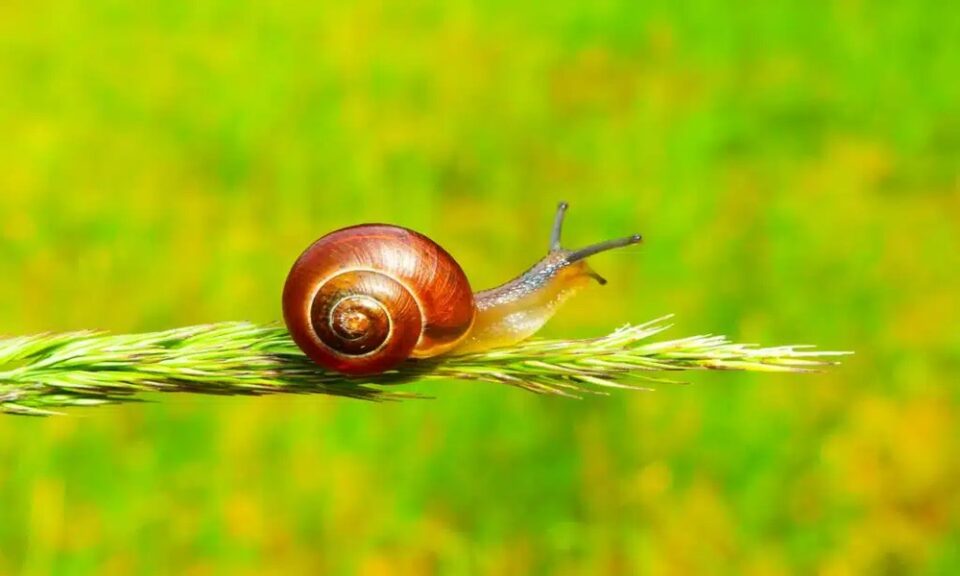
Snail damage in Lake Elsinore gardens follows a predictable and frustrating pattern. Homeowners plant something – a vegetable garden, a row of hostas, freshly laid sod, new groundcover along the front walkway – and within a few nights, it’s been shredded. The culprit is almost always the brown garden snail (Cornu aspersum), the same species that arrived in California in the 1850s as a food source and has been a residential pest ever since. Main Sail Pest Control includes snail and slug management as part of recurring perimeter service throughout Lake Elsinore, because the conditions that make this valley ideal for residential landscaping make it equally ideal for the snails that destroy it. Understanding why the problem is so persistent here helps explain why managing it requires more than a box of bait from the hardware store.
Why the Elsinore Valley Is Particularly Good Snail Habitat
Snails need three things to thrive: mild temperatures, moisture, and plant material to eat. Lake Elsinore provides all three in abundance, and the specific way residential landscaping is managed in this climate amplifies each one.
Temperature first. The brown garden snail goes dormant when temperatures drop below freezing or rise above about 95°F. The Elsinore Valley rarely sees hard freezing temperatures, and during the hottest summer days snails simply retreat under mulch, beneath low-lying vegetation, or into the soil and wait. They don’t die. They estivate – a summer dormancy – and resume activity as temperatures moderate in fall and after the first significant rain event. A snail population that is inactive during a July heat wave is still entirely present in the landscape and resumes feeding damage as soon as conditions improve.
Irrigation is the second factor. Most Lake Elsinore residential landscaping is on drip or spray irrigation systems that run in the early morning hours. That irrigation creates the surface moisture snails need to travel and feed, even when the surrounding air is dry. A garden that receives no rainfall for four months but is irrigated three times per week is functionally moist from the snail’s perspective. Drip irrigation that keeps the soil surface consistently damp around the base of plants – particularly vegetable gardens and flower beds – creates prime feeding conditions that are available regardless of season.
Mulch compounds the problem. Heavy mulch layers, which are commonly used in Lake Elsinore landscaping to reduce evaporation during hot summers, provide the daytime shelter snails need. A thick layer of wood chip mulch directly under plants maintains moisture at the surface while providing dark, cool hiding spaces that protect snails during daylight hours. The same mulch that helps your plants survive the summer heat gives the snails a hotel to sleep in.
The Damage Pattern and What It Tells You
Brown garden snails feed at night and in the early morning before temperatures rise. By the time a homeowner sees the damage – jagged holes in leaves, entire seedlings stripped, irregular shallow channels in succulent foliage – the feeding is already done and the snails have retreated to shelter.
The damage pattern differs from other common landscape pests, which helps with identification. Caterpillar feeding tends to be more systematic, following leaf edges or midribs. Aphid damage causes curling and distortion rather than clean removal of tissue. Snail feeding produces the characteristic ragged, irregular holes in leaves, often with the silvery mucus trail that confirms the culprit if it’s still visible on the surface in the morning.
Seedlings and young transplants are the most vulnerable targets. A snail can consume an entire seedling in a single night. Established plants with mature foliage tolerate significant snail feeding without dying, though the cosmetic damage is considerable. New plantings – the exact moment when homeowners have the most emotional investment in their garden – are the highest-risk period.
Why Hardware Store Bait Products Have Limitations
Metaldehyde-based snail bait has been the standard DIY product for decades. It works when properly applied – metaldehyde causes snails to produce excessive mucus, become dehydrated, and die. The limitations are practical rather than efficacy-based.
The most significant limitation for households with dogs is toxicity. Metaldehyde is highly toxic to dogs and is one of the more common pet poisoning incidents reported by veterinary poison control services. Dogs are attracted to the pellet form and the smell of some bait formulations. A dog that consumes a meaningful quantity of metaldehyde bait can experience muscle tremors, seizures, and potentially fatal hyperthermia. This is not a theoretical risk – it’s common enough that the ASPCA’s Animal Poison Control Center lists metaldehyde among the more frequent garden chemical exposures they handle.
Iron phosphate bait products, marketed as pet-safe alternatives, break down in the environment into iron and phosphate, which are not toxic to mammals at bait concentrations. They’re less effective per application than metaldehyde and require more frequent reapplication, but they’re the responsible choice for households with dogs or cats that have access to the garden.
The second limitation is coverage. Consumer bait products need to be spread throughout the garden in sufficient density that foraging snails encounter bait before reaching the plants. In a large landscape with multiple planting areas, perimeter pathways, and foundation plantings, achieving adequate coverage with bait applications placed manually is time-intensive and difficult to maintain consistently. Bait also degrades after rain or irrigation and needs to be reapplied – often the frequency of application needed exceeds what most homeowners sustain.
How Professional Perimeter Treatment Addresses Snail Pressure Differently
Snail management through professional perimeter service works on a different principle than garden bait. Rather than distributing product throughout planting areas, perimeter treatment targets the pathways snails use to enter a property and the harborage areas around the structure’s foundation where populations build up.
Snails in a residential landscape don’t appear from nowhere – they migrate from adjacent properties, from undeveloped margins, and from areas of dense ground cover or mulch along the perimeter. Maintaining a treated perimeter zone around the property creates a consistent barrier that interrupts that movement. Treating under mulch and along foundation edges addresses the harborage zone where snails shelter during the day.
This approach is included in Main Sail Pest Control’s recurring service visits, meaning snail management is addressed on the same schedule as ant and spider perimeter treatment – without requiring the homeowner to separately purchase, apply, and maintain bait throughout the garden. For households with dogs, professional applications use products and application methods that address the pet safety concern.
When to Contact Main Sail Pest Control About Snail and Slug Damage
If snail damage is a recurring frustration in your Lake Elsinore garden despite bait applications, the issue is almost certainly population pressure from outside the immediate planting area that bait alone can’t address. The same is true if you have dogs and have been reluctant to use the products that actually work.
Main Sail Pest Control serves Lake Elsinore, Wildomar, Menifee, Canyon Lake, and surrounding communities. Snail and slug management is included in our perimeter service plans – not a separate treatment that requires additional scheduling. Contact us for a free estimate and we’ll assess what’s driving the damage and what service frequency makes sense for your property’s specific conditions.
