
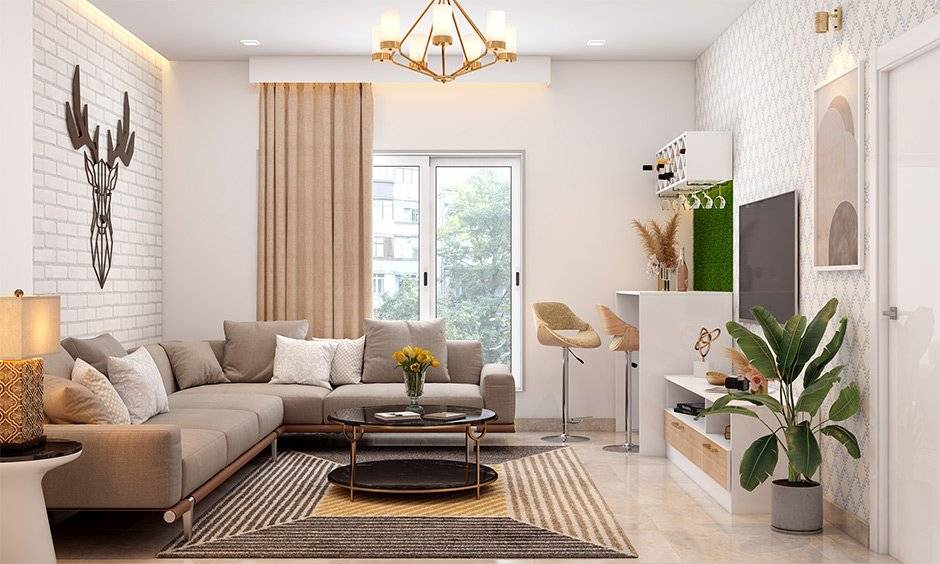
A long, narrow living room is one of the most common — and most challenging — floor plan situations. The proportions work against you: furniture feels like it’s lined up in a hallway. Finding a functional long narrow living room layout is the key to making the space feel like a home rather than a walkway.
The key to a successful long narrow living room layout is to break the length into zones, anchor furniture away from walls, and use visual tricks that add perceived width. Here are the layouts and strategies that consistently work.
Understanding the Problem First
Before rearranging anything, it helps to understand why narrow rooms feel awkward:
| The Problem | Why It Happens |
| Furniture pushed against walls | Creates a “waiting room” feel; elongates the room visually |
| One long sofa facing one direction | Draws the eye down the length, emphasizing the tunnel effect |
| No defined zones | The room reads as one long corridor rather than a living space |
| Rug that’s too small | Leaves furniture floating; emphasizes the narrow floor space |
Layout Option 1 — The Two-Zone Approach (Best for Longer Rooms)
Divide the room into two distinct areas with their own purpose and furniture arrangement. This is the most effective strategy for very long rooms.
How to set it up:
- Place the sofa perpendicular to the long wall (facing across the width of the room, not down the length)
- Create a seating cluster at one end — sofa + two chairs facing each other, coffee table in the middle
- At the other end, create a second zone: a reading nook, a desk area, or a small dining setup
- Use a large area rug under the seating cluster to define the zone
Why it works: Two rugs and two furniture clusters visually shorten the perceived length and make the room feel intentional rather than stretched.
Layout Option 2 — Floating Furniture (Most Common Fix)
The single most impactful change for any narrow room is pulling furniture away from the walls.
| Before | After |
| Sofa pushed flat against the long wall | Sofa floated 12–18 inches from the wall |
| Chair tucked in corners | Chair angled toward the sofa |
| Coffee table centered in vast empty space | Coffee table closer to sofa (18 inches away) |
Floating the sofa creates space behind it, which can be used for a console table, plants, or floor lamps — and it pulls the focus inward rather than around the perimeter.
Layout Option 3 — Diagonal Furniture Placement
Placing the sofa or a key piece of furniture on a slight angle (45 degrees to the wall) is a bold move that works well in narrow rooms because it creates visual width and breaks up the linear flow.
Works best when:
- The room is very narrow (under 10 feet wide)
- Other layout options feel too constrictive
- You’re open to a less conventional look
A diagonal rug under the angled sofa completes the look and makes it feel deliberate.
Layout Option 4 — Across-the-Width Seating
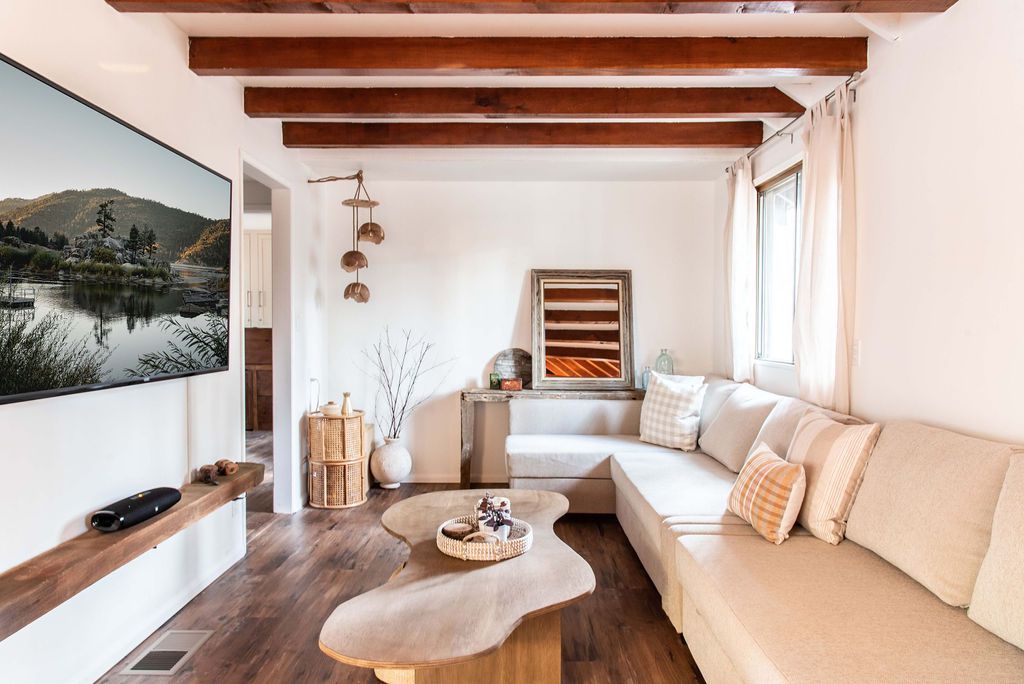
Instead of aligning furniture along the long axis of the room, arrange everything so people sit facing each other across the width.
Setup:
- Sofa on one long wall, two chairs on the opposite long wall
- Coffee table between them
- This creates a conversation area that runs across the room’s width rather than down its length
This is often the simplest fix in rooms that are 10–13 feet wide — it naturally creates balance and makes the room feel shorter.
Visual Tricks That Make Narrow Rooms Feel Wider
Use Horizontal Lines
- Horizontal striped rugs visually expand width
- Low, wide furniture (low-profile sofas, long coffee tables) emphasize width over height
- Horizontal shelving on the short walls draws the eye across rather than down
Color and Light
- Light, cool wall colors (whites, soft grays, pale blues) make walls feel farther away
- Paint the two short end walls a slightly darker shade — this “pushes” them back visually and shortens the perceived length
- Mirrors on the long walls add perceived depth and width
Curtains and Windows
- Hang curtain rods as close to the ceiling as possible — vertical height counterbalances the horizontal stretch
- Use curtains that span the full width of the window wall — even past the window frame — to make windows appear larger
Rug Strategy
- Use the largest rug that fits the space — undersized rugs make narrow rooms feel more cramped
- For the two-zone layout, use two medium rugs rather than one long one
Furniture Choices for Narrow Living Rooms
| Furniture Type | What to Choose | What to Avoid |
| Sofa | Low-profile, legs visible (not skirted) | Deep, oversized sectionals |
| Coffee table | Round or oval | Large rectangular tables |
| Storage | Tall vertical shelving on short walls | Wide horizontal units on long walls |
| Lighting | Floor lamps in corners; pendants | Large overhead chandeliers that drop into space |
| Chairs | Accent chairs with open frames | Bulky club chairs |
Common Mistakes to Avoid
- Lining all furniture along the walls — the most common mistake; makes the room feel like a hallway
- One giant rug that runs the length of the room — emphasizes the length rather than breaking it
- Too many pieces — narrow rooms need editing; fewer, better-scaled pieces work better than filling every corner
- Identical furniture on both long walls — creates a mirroring effect that stretches the room visually
Bottom Line
A long narrow living room doesn’t have to feel like a bowling alley. The biggest fixes — floating furniture away from walls, creating two distinct zones, and choosing appropriately scaled pieces — cost nothing to try and make an immediate visual difference. Start by pulling the sofa off the wall and see how the room already changes. Then work from there. The best layout is one that makes you forget the room is narrow at all.
